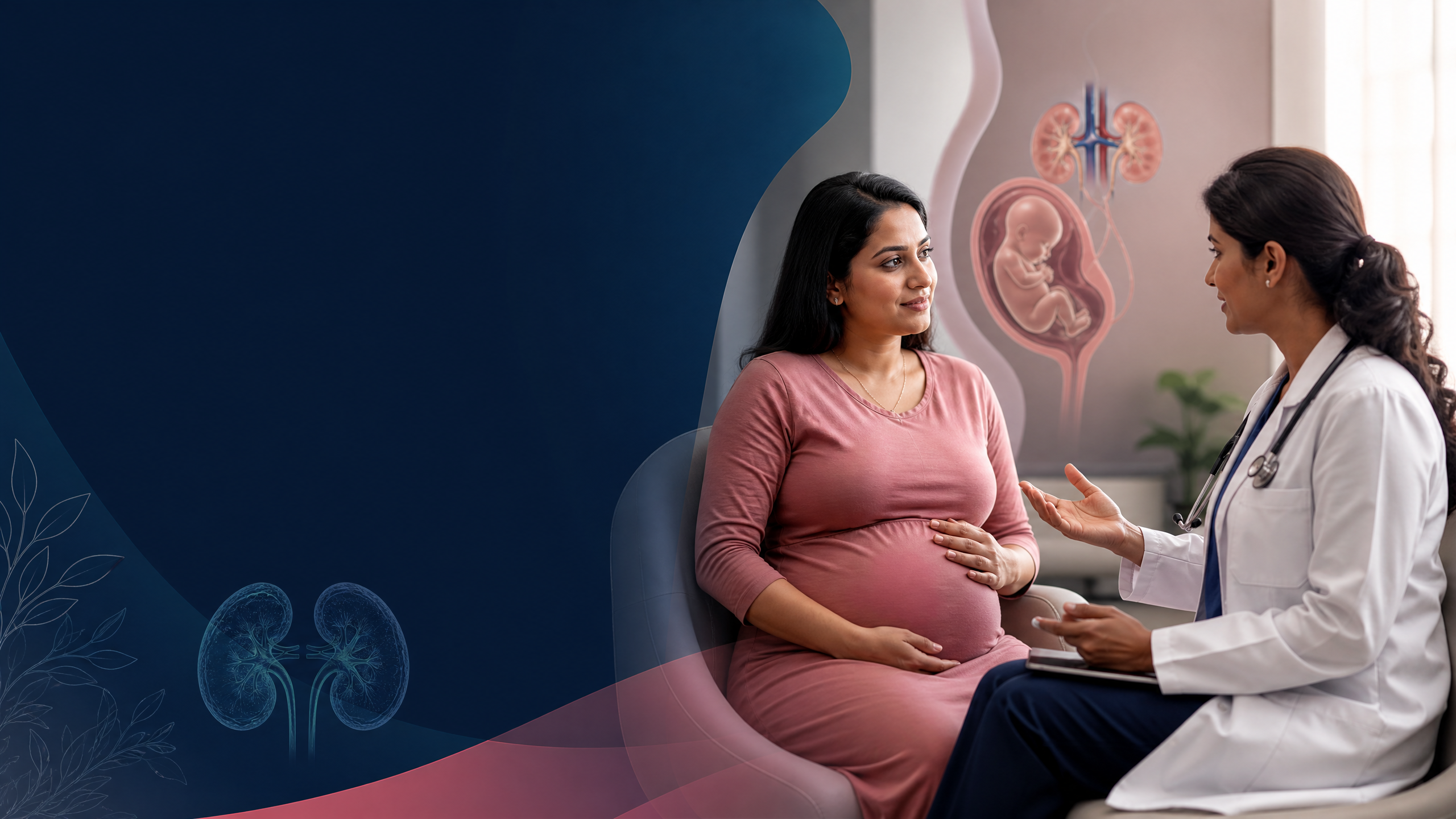
Chapter 36: Nephrology in Pregnancy – Complete Educational Package
Learning Objectives
By the end of this chapter, learners will be able to:
1. Understand the normal physiological renal changes during pregnancy.
2. Identify common kidney diseases that can occur or worsen during pregnancy.
3. Discuss the management of chronic kidney disease (CKD) in pregnancy.
4. Recognize the challenges and management of acute kidney injury (AKI) in pregnancy.
5. Outline the approach to hypertension and proteinuria in pregnancy, including preeclampsia.
36.1 Normal Physiological Renal Changes in Pregnancy
Pregnancy induces significant physiological changes in the maternal renal system to support the growing fetus and adapt to the increased metabolic demands. These changes can sometimes mimic or mask renal pathology.
- Increased Glomerular Filtration Rate (GFR): GFR increases by 30-50% by the end of the first trimester, leading to a decrease in serum creatinine and urea levels. A normal creatinine in pregnancy is lower than in non-pregnant individuals (e.g., 0.4-0.8 mg/dL).
- Increased Renal Plasma Flow (RPF): RPF increases by 50-80%, contributing to the elevated GFR.
- Renal Size: Kidneys may increase in size by 1-1.5 cm due to increased renal blood flow and interstitial volume.
- Dilatation of Collecting System: Progesterone-induced smooth muscle relaxation and mechanical compression by the gravid uterus lead to dilatation of the renal calyces, pelves, and ureters (hydronephrosis of pregnancy), more pronounced on the right side. This is physiological but can predispose to urinary tract infections.
- Fluid and Electrolyte Balance: Total body water and sodium increase. Plasma osmolality decreases due to a resetting of the osmostat, leading to a lower serum sodium concentration (physiological hyponatremia).
- Acid-Base Balance: Mild respiratory alkalosis with compensatory metabolic acidosis (lower bicarbonate) is common due to increased minute ventilation.
- Proteinuria: While GFR increases, urinary protein excretion generally remains below 300 mg/day. Any proteinuria >300 mg/day is considered abnormal and requires investigation.
36.2 Common Kidney Diseases in Pregnancy
Pregnancy can unmask or exacerbate pre-existing kidney conditions, and some renal diseases are unique to pregnancy.
- Urinary Tract Infections (UTIs): More common due to urinary stasis from collecting system dilatation. Asymptomatic bacteriuria (ASB) is common and should be screened for and treated to prevent pyelonephritis.
- Acute Pyelonephritis: A serious complication of UTI, often requiring hospitalization and intravenous antibiotics.
- Preeclampsia: A multisystem disorder characterized by new-onset hypertension (systolic ≥140 mmHg or diastolic ≥90 mmHg) and proteinuria (≥300 mg/24h) after 20 weeks of gestation. It can lead to kidney injury, liver dysfunction, hematological abnormalities, and neurological complications. Severe features include severe hypertension, thrombocytopenia, impaired liver function, renal insufficiency, pulmonary edema, or new-onset cerebral or visual disturbances.
- Acute Kidney Injury (AKI) in Pregnancy: Causes include preeclampsia/eclampsia, HELLP syndrome (Hemolysis, Elevated Liver enzymes, Low Platelets), septic abortion, postpartum hemorrhage, and atypical hemolytic uremic syndrome (aHUS).
- Glomerular Diseases: Can present de novo or worsen during pregnancy. Management depends on the specific type of glomerulonephritis.
36.3 Management of Chronic Kidney Disease (CKD) in Pregnancy
Pregnancy in women with CKD is considered high-risk and requires multidisciplinary care.
- Preconception Counseling: Essential to discuss risks to mother and fetus, and optimize CKD management before conception.
- Risk Assessment: Risks increase with higher stages of CKD. Women with GFR <30 mL/min/1.73m² or significant proteinuria face higher risks of preeclampsia, preterm birth, fetal growth restriction, and accelerated CKD progression.
- Monitoring: Frequent monitoring of blood pressure, renal function (creatinine, proteinuria), and fetal growth.
- Medication Management: Review and adjust medications. ACE inhibitors and ARBs are contraindicated. Labetalol, nifedipine, and methyldopa are commonly used antihypertensives.
- Dialysis in Pregnancy: For ESRD patients, increased frequency and duration of dialysis are often required to maintain adequate solute clearance and fluid balance, aiming for higher Kt/V and lower BUN levels.
- Kidney Transplantation and Pregnancy: Successful pregnancy is possible after kidney transplant, but requires careful monitoring of immunosuppression and renal function.
36.4 Acute Kidney Injury (AKI) in Pregnancy
AKI in pregnancy is a serious condition requiring prompt diagnosis and management.
- Causes: Specific causes include severe preeclampsia/eclampsia, HELLP syndrome, acute fatty liver of pregnancy, septic abortion, and postpartum hemorrhage. Non-pregnancy related causes (e.g., sepsis, hypovolemia) can also occur.
- Diagnosis: Based on standard AKI criteria, but interpretation of creatinine levels must consider the physiological decrease in pregnancy.
- Management: Address the underlying cause, optimize fluid status, manage electrolytes, and consider renal replacement therapy if indicated.
36.5 Hypertension and Proteinuria in Pregnancy
Distinguishing between various hypertensive disorders of pregnancy is critical for appropriate management.
- Chronic Hypertension: Hypertension present before pregnancy or diagnosed before 20 weeks of gestation.
- Gestational Hypertension: New-onset hypertension after 20 weeks of gestation without proteinuria.
- Preeclampsia: New-onset hypertension and proteinuria after 20 weeks of gestation.
- Preeclampsia Superimposed on Chronic Hypertension: Worsening hypertension or new-onset proteinuria in a woman with chronic hypertension.
Management involves careful monitoring, antihypertensive therapy, and timely delivery. Magnesium sulfate is used for seizure prophylaxis in severe preeclampsia/eclampsia.
Key Points on Nephrology in Pregnancy
- Physiological Changes: Increased GFR/RPF, decreased creatinine, collecting system dilatation (hydronephrosis of pregnancy), physiological hyponatremia.
- Common Conditions: UTIs (including ASB), pyelonephritis, preeclampsia, AKI.
- CKD in Pregnancy: High-risk, requires preconception counseling, frequent monitoring, medication adjustment (ACEi/ARB contraindicated), and intensified dialysis if ESRD.
- AKI in Pregnancy: Causes include preeclampsia/eclampsia, HELLP, septic abortion. Diagnosis considers lower baseline creatinine.
- Hypertensive Disorders: Differentiate chronic hypertension, gestational hypertension, preeclampsia, and superimposed preeclampsia for appropriate management.
Nephrology in Pregnancy Quick Guide
- Kidneys Work Harder: GFR increases, creatinine drops.
- UTIs are Common: Screen and treat asymptomatic bacteriuria.
- Preeclampsia is Key: New hypertension + proteinuria after 20 weeks.
- CKD is High Risk: Close monitoring, multidisciplinary care.
- Medications Matter: Avoid ACEi/ARBs.
Diagnostic Pearls
- Pregnancy lowers the expected serum creatinine; a value that appears normal outside pregnancy may represent impaired kidney function during pregnancy.
- Interpret new hypertension and proteinuria in relation to gestational age, baseline kidney disease, platelet count, liver tests, symptoms and fetal status.
- When AKI develops, evaluate obstetric, infectious, hemodynamic, thrombotic and glomerular causes in parallel.
Management Pearls
- Use a coordinated obstetric–nephrology plan for medication review, blood-pressure monitoring, fetal surveillance and delivery planning.
- Avoid ACE inhibitors and ARBs during pregnancy; choose alternatives with the obstetric and nephrology teams.
- After delivery, reassess kidney function, blood pressure, proteinuria, and medication compatibility because risk does not end at birth.
Multiple-Choice Questions
Question 1
A pregnant patient at 28 weeks has new hypertension, increasing proteinuria, and a rising creatinine. Which approach is most appropriate?
- Assume the creatinine is normal because it is within the non-pregnant reference range.
- Evaluate for preeclampsia or a superimposed process while assessing maternal and fetal status.
- Start an ACE inhibitor immediately.
- Delay evaluation until after delivery.
Answer: B. New hypertension, proteinuria and renal dysfunction after 20 weeks require urgent evaluation for preeclampsia or another superimposed cause.
Question 2
Which medication class should generally be avoided during pregnancy because of fetal kidney and developmental risk?
- ACE inhibitors and ARBs
- All beta blockers
- All calcium-channel blockers
- All antibiotics
Answer: A. Medication selection should be individualized, but ACE inhibitors and ARBs are generally avoided during pregnancy.