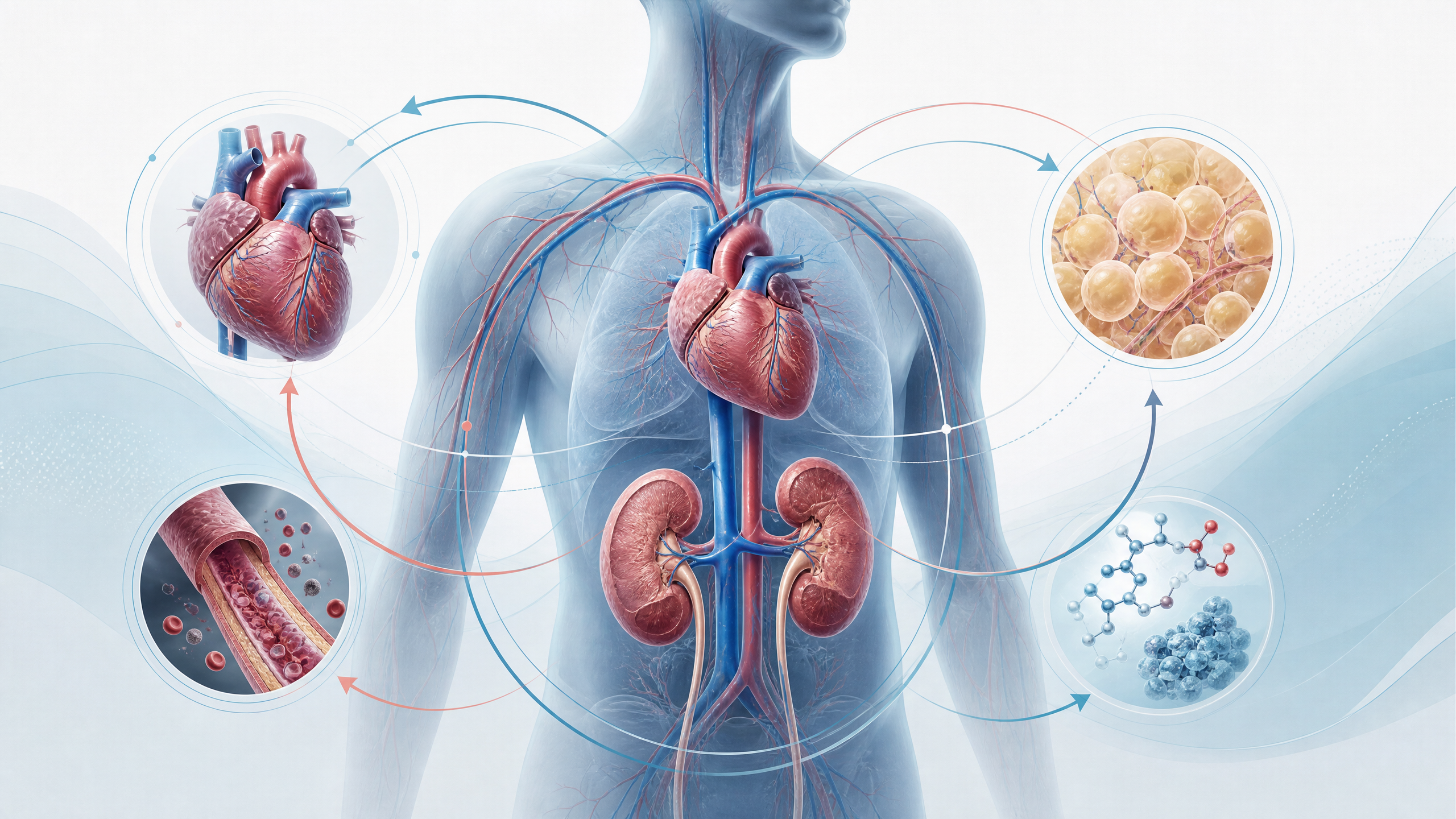
Educational scope. This chapter is intended for postgraduate education. It summarizes contemporary evidence and guideline principles; local formularies, regulatory approvals, renal dosing guidance, and individual patient factors must be considered before clinical application.
Learning objectives
By the end of this chapter, the reader should be able to define cardiovascular–kidney–metabolic (CKM) syndrome, explain the bidirectional pathophysiology linking adiposity, metabolic disease, chronic kidney disease (CKD), and cardiovascular disease (CVD), apply the five-stage CKM framework, construct a minimum assessment for risk and organ involvement, and design a coordinated multidisciplinary care plan. The reader should also be able to select treatment priorities according to phenotype, recognize the complementary roles of sodium–glucose cotransporter-2 inhibitors (SGLT2 inhibitors), glucagon-like peptide-1 (GLP-1)-based therapies, renin–angiotensin system blockade, and finerenone, and identify important safety and implementation issues.
1. Why CKM health requires a new clinical model
Cardiovascular, kidney, and metabolic disorders have traditionally been organized into separate specialty pathways. In practice, however, obesity and dysfunctional adipose tissue, insulin resistance, type 2 diabetes (T2D), hypertension, dyslipidemia, CKD, heart failure (HF), atrial fibrillation, atherosclerotic CVD, and metabolic dysfunction–associated steatotic liver disease (MASLD) frequently coexist and amplify one another. The American Heart Association (AHA) therefore introduced cardiovascular–kidney–metabolic (CKM) syndrome as a systemic disorder arising from the pathophysiological interactions among metabolic risk factors, CKD, and the cardiovascular system, including people at risk for CVD and those with established CVD.1
The term cardio-renal-metabolic (CRM) is also used, particularly in European and primary-care literature. CRM and CKM describe substantially overlapping biology and clinical priorities. This chapter uses CKM when referring to the AHA staging construct and uses CRM/CKM when emphasizing a health-system or multidisciplinary model.
The central clinical implication is that the unit of care should not be a single disease. A patient with albuminuric CKD and obesity, for example, has more than the sum of isolated diagnoses: adipose-tissue inflammation, endothelial dysfunction, neurohormonal activation, insulin resistance, altered sodium handling, and vascular and myocardial remodeling create a self-reinforcing cycle. A fragmented model may treat each abnormality sequentially; an integrated model identifies the highest-risk links in the cycle and addresses them together.
The 2026 AHA/ACC/ADA/ASN guideline extends the original advisory into a formal prevention, detection, evaluation, and management guideline. It recommends CKM staging for youths and adults, routine assessment of metabolic and kidney risk factors, use of the PREVENT equations for CVD risk estimation, systematic attention to social determinants of health (SDOH), interdisciplinary care with a coordination point person, and phenotype-guided use of weight-management and cardioprotective therapies.2
2. Pathophysiology: a connected organ system
2.1 Dysfunctional adiposity as an initiating driver
Excess adiposity is not merely an anthropometric measurement. Visceral and ectopic fat can promote chronic low-grade inflammation, adipokine imbalance, insulin resistance, lipotoxicity, sympathetic activation, and activation of the renin–angiotensin–aldosterone system. These processes contribute to hypertension, hypertriglyceridemia, T2D, endothelial dysfunction, CKD progression, coronary disease, and HF. Body mass index (BMI) is useful for population assessment but should be complemented by waist circumference, body-fat distribution, functional status, and the presence of adiposity-related complications.1 2
2.2 Kidney–heart cross-talk
The heart and kidneys interact through hemodynamic, neurohormonal, inflammatory, metabolic, and vascular pathways. CKD increases the risks of HF, coronary disease, stroke, atrial fibrillation, and mortality; albuminuria and reduced estimated glomerular filtration rate (eGFR) provide complementary information and should not be treated as interchangeable markers. Conversely, HF and venous congestion can reduce renal perfusion and increase renal interstitial pressure, while treatment of congestion can produce an expected early fall in eGFR without necessarily representing structural kidney injury.
2.3 Metabolic disease as a force multiplier
Hyperglycemia, insulin resistance, hypertension, dyslipidemia, and hyperuricemia act through overlapping pathways. Diabetes accelerates glomerular and vascular injury, while CKD alters glucose metabolism, drug clearance, anemia physiology, mineral metabolism, and cardiovascular reserve. The result is a higher absolute risk of adverse outcomes and a narrower margin for therapeutic error. This is why CKM care prioritizes absolute risk and organ protection rather than glycemic or blood-pressure targets in isolation.
2.4 Beyond the original triad
MASLD, obstructive sleep apnea, frailty, sarcopenia, and social risk are clinically relevant extensions of the CKM spectrum. A 2025 narrative review emphasizes that SGLT2 inhibitors, GLP-1-based therapies, and finerenone may provide multi-organ benefits, while also arguing for earlier intervention, personalized treatment, technology-enabled follow-up, and explicit consideration of frailty and MASLD.3 These emerging extensions should enrich—not obscure—the core CKM assessment.
3. The five-stage CKM framework
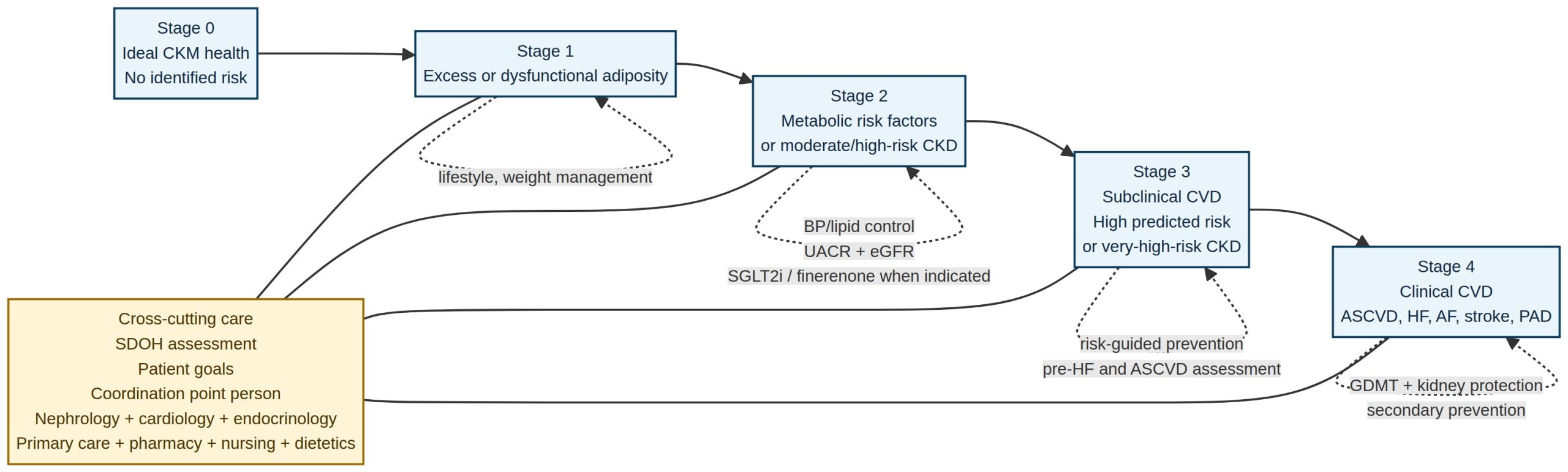
The AHA framework describes a continuum from no identified risk to clinical CVD. Stages are not simply severity labels; they identify opportunities for prevention, regression, and more intensive surveillance. A patient may have different risk enhancers within a stage, and clinical judgment remains necessary when data are incomplete.1 2
| CKM stage | Core features | Main clinical objective |
|---|---|---|
| 0 | No identified CKM risk factors | Preserve ideal cardiovascular health through primordial prevention, healthy weight, activity, nutrition, sleep, and avoidance of tobacco. |
| 1 | Excess or dysfunctional adiposity without established metabolic disease | Prevent progression and support clinically meaningful, durable weight loss using intensive lifestyle care and, when appropriate, pharmacotherapy or metabolic/bariatric surgery. |
| 2 | Metabolic risk factors such as hypertension, hypertriglyceridemia, prediabetes/T2D, metabolic syndrome, or moderate-to-high-risk CKD | Detect organ involvement early; control blood pressure and lipids; use kidney- and cardiovascular-protective therapies when indicated. |
| 3 | Subclinical CVD, high predicted CVD risk, or very-high-risk CKD without clinical CVD | Intensify prevention, evaluate for pre-HF and subclinical atherosclerosis when clinically appropriate, and reduce progression to clinical CVD. |
| 4 | Clinical CVD in the setting of CKM risk factors, including ASCVD, HF, atrial fibrillation, stroke, or peripheral artery disease | Deliver guideline-directed secondary prevention while protecting kidney function, managing metabolic drivers, and coordinating specialty care. |
Risk-enhancing factors include adverse SDOH, family history, inflammatory disease, sleep disorders, pregnancy-related metabolic complications, severe or rapidly progressive CKD, and other features that may increase the likelihood of progression. The 2026 guideline uses the PREVENT equations to estimate 10- and 30-year risks for ASCVD, HF, and total CVD; a predicted 10-year total CVD risk of at least 20% is one criterion informing stage 3, while a risk of at least 7.5% may support prioritization of pharmacotherapy in the appropriate clinical context.2
4. Clinical assessment and staging in practice
4.1 A minimum dataset
Every adult being evaluated for CKM risk should have a structured assessment that combines history, examination, laboratory data, kidney risk characterization, cardiovascular risk estimation, medication review, and SDOH. The minimum dataset should include blood pressure with attention to measurement quality, weight, BMI, waist circumference where feasible, smoking and alcohol history, physical activity, diet, sleep, family history, pregnancy history where relevant, and symptoms of HF, ischemia, arrhythmia, claudication, and sleep apnea.
Laboratory assessment generally includes fasting or nonfasting lipid profile, hemoglobin A1c and/or glucose testing, serum creatinine with eGFR, electrolytes, and urine albumin-to-creatinine ratio (UACR). UACR is particularly important because albuminuria may identify elevated cardiovascular and kidney risk even when eGFR is preserved. Repeat abnormal results when clinically appropriate to distinguish persistent CKD from transient changes. Consider liver enzymes and evaluation for MASLD when metabolic risk is substantial.
4.2 Cardiovascular evaluation
Risk estimation should be proportional to stage and clinical context. In patients without established CVD, use a validated risk equation appropriate to the population and age range, while recognizing that risk equations do not replace clinical judgment. The PREVENT framework is now specifically incorporated into the 2026 CKM guideline.2
Investigate symptoms and signs rather than ordering indiscriminate testing. Natriuretic peptides, electrocardiography, echocardiography, ambulatory rhythm monitoring, coronary artery calcium assessment, or vascular imaging may be appropriate in selected patients with suspected HF, arrhythmia, subclinical CVD, or uncertain risk. The purpose of testing is to change management, not simply to label risk.
4.3 SDOH and treatment feasibility
SDOH screening should address food security, housing and utility instability, transportation, financial barriers, health literacy, medication access, digital access, safety, social support, and competing caregiving or employment demands. The AHA identifies adverse SDOH as a major contributor to CKM burden and recommends incorporating SDOH into care models rather than treating them as peripheral background information.1 A positive screen should trigger a feasible response—such as social work, community health worker, dietitian, pharmacy assistance, transportation support, or social prescribing—rather than become an additional undocumented diagnosis.
5. The multidisciplinary CRM/CKM care model
5.1 Team composition and the coordination point person
The core team should include primary care or family medicine, nephrology, cardiology, endocrinology/diabetology, nursing, pharmacy, dietetics, behavioral health, and exercise or rehabilitation expertise according to need. Social work, community health workers, hepatology, sleep medicine, and bariatric services should be available for selected patients. The 2026 guideline emphasizes a CKM coordination point person who aligns goals, medication changes, monitoring, referrals, and patient education.2
A 2025 multidisciplinary Delphi consensus involving cardiology, endocrinology, internal medicine, nephrology, and family medicine reached agreement on early recognition, primary prevention, intensive weight management, CKM-beneficial medication use, and coordination by family medicine.4 The consensus is not a substitute for randomized evidence, but it supports a practical service model: primary care or internal medicine coordinates the longitudinal pathway, while specialists co-manage defined high-risk problems.
5.2 Shared goals and a single care plan
The team should agree on a small number of patient-centered outcomes: preservation of eGFR and reduction of albuminuria, prevention of HF hospitalization or ASCVD events, durable weight loss where appropriate, blood-pressure and lipid control, improved functional capacity, and treatment burden that the patient can sustain. Each medication change should include an owner, monitoring plan, sick-day or peri-procedural instructions, and a date for review.
| Domain | Core measures | Typical responsible roles |
|---|---|---|
| Adiposity and lifestyle | Weight trajectory, waist circumference, nutrition, activity, sleep, function | Primary care, dietitian, obesity medicine, nurse, exercise professional |
| Kidney | eGFR trend, UACR, potassium, blood pressure, CKD complications | Nephrology, primary care, pharmacist |
| Cardiovascular | ASCVD risk, HF symptoms, BP, lipids, ECG/echo when indicated | Cardiology, primary care, nephrology |
| Metabolism | A1c/glucose, hypoglycemia risk, triglycerides, medication burden | Endocrinology, primary care, pharmacist |
| Feasibility and equity | Cost, access, transport, food/housing security, literacy, digital access | Social work, community health worker, care coordinator |
5.3 Follow-up cadence
Follow-up intensity should match stage, treatment changes, kidney function, potassium risk, symptoms, and ability to self-monitor. Early review is appropriate after starting or titrating agents that alter volume status, renal hemodynamics, glycemia, or potassium. Longer-term reviews should reassess stage, trajectory, adherence, adverse effects, laboratory trends, and whether treatment goals remain aligned with patient preferences and frailty.
6. Therapeutic principles: treat the patient’s risk phenotype
6.1 Lifestyle and weight management
Lifestyle treatment is foundational at every stage, but “lifestyle advice” should be delivered as structured, repeated, multidisciplinary care rather than a one-time instruction. Nutrition plans should be culturally acceptable and kidney-appropriate; physical activity should be individualized to cardiovascular status, frailty, symptoms, and mobility; sleep and tobacco cessation should be addressed; and behavioral support should be available. Weight loss should be framed around health outcomes and function, not stigma.
For persistent obesity or obesity-related complications, anti-obesity pharmacotherapy and metabolic/bariatric surgery may be appropriate. The 2026 guideline places obesity treatment within CKM prevention and permits escalation beyond lifestyle interventions when clinically indicated.2 In CKD, nutritional prescriptions require particular care to avoid excessive protein restriction, malnutrition, electrolyte complications, or loss of lean mass.
6.2 Blood pressure, lipids, and renin–angiotensin system blockade
Blood-pressure targets should be individualized using contemporary hypertension and CKD guidance, measurement quality, orthostatic symptoms, frailty, and competing risks. Angiotensin-converting enzyme inhibitors or angiotensin receptor blockers remain central when albuminuria or other indications are present. After initiation or dose escalation, check creatinine and potassium and interpret changes in the context of volume status, renal perfusion, NSAID exposure, and intercurrent illness. Avoid dual renin–angiotensin system blockade.
Lipid management should follow ASCVD risk and secondary-prevention guidance, with statin-based therapy as the foundation when indicated. CKD, diabetes, and established CVD generally increase absolute benefit from intensive risk reduction. Address triglycerides through weight, glycemia, alcohol, diet, secondary causes, and selected pharmacologic strategies.
6.3 SGLT2 inhibitors
SGLT2 inhibitors are a cornerstone of contemporary CKM care because benefits extend beyond glucose lowering. In CKD, dapagliflozin reduced the risk of a composite kidney outcome in DAPA-CKD, including participants with and without diabetes.5 Empagliflozin reduced progression of kidney disease or cardiovascular death in EMPA-KIDNEY across a broad CKD population.6 SGLT2 inhibitors also reduce HF hospitalization risk across a range of ejection fractions and are recommended according to the relevant CKD, diabetes, and HF indications.2
Expect a small early eGFR dip related to hemodynamic change; assess whether the magnitude, symptoms, or context suggest volume depletion, infection, obstruction, or another cause. Counsel about genital mycotic infection, volume depletion, sick-day interruption during significant acute illness or prolonged fasting, and perioperative management. Consider ketoacidosis risk in insulin-deficient states and avoid casual extrapolation beyond approved eGFR and indication thresholds.
6.4 Trial-level evidence for CKM organ protection
The CKM rationale for organ-protective therapy is supported by dedicated outcome trials rather than glucose lowering alone. In DAPA-CKD, 4,304 participants with CKD, eGFR 25–75 mL/min/1.73 m², and UACR 200–5,000 mg/g were randomized to dapagliflozin or placebo; participants could have T2D or no diabetes. Over a median 2.4 years, the primary composite of sustained eGFR decline of at least 50%, end-stage kidney disease, or renal/cardiovascular death occurred in 197 of 2,152 participants (9.2%) receiving dapagliflozin versus 312 of 2,152 (14.5%) receiving placebo; HR 0.61 (95% CI 0.51–0.72), with an NNT of approximately 19 over the trial period.5 The kidney-specific composite had HR 0.56 (95% CI 0.45–0.68), and cardiovascular death or HF hospitalization had HR 0.71 (95% CI 0.55–0.92).
EMPA-KIDNEY broadened the evidence base by enrolling 6,609 patients across a wide CKD spectrum, including patients with and without diabetes. Over a median 2.0 years, kidney disease progression or cardiovascular death occurred in 432 of 3,304 participants (13.1%) receiving empagliflozin versus 558 of 3,305 (16.9%) receiving placebo; HR 0.72 (95% CI 0.64–0.82).6 Results were consistent among patients with and without diabetes and across eGFR subgroups. All-cause hospitalization was lower with empagliflozin, HR 0.86 (95% CI 0.78–0.95), while serious adverse-event rates were similar.
In FLOW, semaglutide reduced the primary kidney outcome in people with T2D and CKD by 24%, with 331 versus 410 first events and HR 0.76 (95% CI 0.66–0.88); cardiovascular death HR was 0.71.8 In SELECT, adults with overweight/obesity and established CVD but without diabetes experienced a 20% relative reduction in major adverse cardiovascular events; HR 0.80 (95% CI 0.72–0.90).7
In FIDELIO-DKD, finerenone reduced the kidney composite in T2D with CKD from 21.1% to 17.8%; HR 0.82.9 In FIGARO-DKD, the cardiovascular composite occurred in 12.4% versus 14.2%; HR 0.87, and hospitalization for HF was reduced with HR 0.71.11
| Trial | Population | Key result | CKM implication |
|---|---|---|---|
| DAPA-CKD | 4,304 adults with albuminuric CKD, with or without T2D; median 2.4 years | Primary composite 9.2% vs 14.5%; HR 0.61; NNT approximately 19 | Strong kidney protection in albuminuric CKD, including without diabetes. |
| EMPA-KIDNEY | 6,609 adults with broad CKD, with or without T2D; median 2.0 years | Kidney progression or CV death 13.1% vs 16.9%; HR 0.72 | Extends SGLT2 evidence across a broad CKD population and eGFR spectrum. |
| FLOW | T2D with CKD | 331 vs 410 kidney events; HR 0.76 | Supports GLP-1-based kidney and cardiovascular protection in selected T2D/CKD. |
| SELECT | Overweight/obesity with established CVD, without diabetes | MACE HR 0.80 | Demonstrates cardiovascular benefit of semaglutide in obesity with established CVD. |
| FIDELIO-DKD | T2D with CKD on background RAAS blockade | Kidney composite 17.8% vs 21.1%; HR 0.82 | Supports finerenone when eGFR, potassium, albuminuria, and labeling criteria are met. |
| FIGARO-DKD | T2D with CKD | CV composite 12.4% vs 14.2%; HR 0.87 | Supports cardiovascular and HF-risk reduction in selected T2D/CKD. |
Trial results apply to appropriately selected populations and do not eliminate the need for absolute-risk assessment, contraindication review, monitoring, and attention to frailty, affordability, and local regulatory labeling.
6.5 GLP-1-based therapies
GLP-1 receptor agonists and related incretin therapies can improve glycemia, weight, and cardiovascular risk. In SELECT, semaglutide reduced major adverse cardiovascular events by approximately 20% in adults with overweight or obesity and established CVD without diabetes.7 In FLOW, semaglutide reduced kidney and cardiovascular outcomes in people with T2D and CKD; a prespecified report described a 24% relative reduction in the major kidney outcome.8
Selection should consider obesity severity, ASCVD, glycemic control, CKD, HF phenotype, gastrointestinal tolerance, retinopathy risk where relevant, gallbladder disease, pancreatitis history, frailty, and nutritional adequacy. GLP-1-based treatment is complementary to—not automatically interchangeable with—SGLT2 inhibition. Combination treatment may be appropriate in selected high-risk patients when indications, tolerability, affordability, and monitoring align.
6.6 Finerenone and residual risk in diabetic CKD
Finerenone, a nonsteroidal mineralocorticoid receptor antagonist, reduces cardiovascular and kidney outcomes in patients with T2D and CKD selected according to eGFR, albuminuria, and potassium criteria. FIDELIO-DKD demonstrated lower risks of CKD progression and cardiovascular events versus placebo,9 while pooled FIDELITY analyses supported benefits across the CKD spectrum.10
Finerenone should generally be considered after or alongside maximally tolerated renin–angiotensin system blockade when indicated, with careful potassium surveillance. Hyperkalemia risk is clinically important; initiation, dose adjustment, and interruption should follow current product information and guideline criteria. SGLT2 inhibitors may reduce hyperkalemia risk, but this should not replace monitoring.
6.7 Heart failure and established CVD
Once clinical CVD is present, secondary prevention and guideline-directed HF therapy should be implemented without losing sight of kidney function, potassium, blood pressure, frailty, and treatment burden. Patients with HF require explicit congestion assessment, volume-management education, and a plan for renal-function review during diuresis. Atrial fibrillation care should integrate stroke prevention, rate or rhythm strategy, comorbidity control, weight, sleep apnea, and CKD-related medication considerations.
7. Safety, special populations, and evidence limits
Therapeutic sequencing should be individualized. Older adults and people with frailty may benefit from comprehensive geriatric assessment, functional goals, simplified regimens, and deprescribing where harms exceed benefits.3 Pregnancy, advanced CKD, dialysis, transplant status, active liver disease, recurrent volume depletion, eating disorders, and unstable HF require specialist input. Renal function should not be interpreted in isolation from trajectory, albuminuria, symptoms, and treatment context.
Evidence is strongest for individual therapies and selected populations; evidence for the entire multidisciplinary CKM care model is less mature. Many trials exclude advanced CKD, severe frailty, multimorbidity, or socially marginalized populations. Future research should evaluate integrated pathways, equity, implementation, patient-reported outcomes, treatment burden, and combinations of organ-protective therapies. The 2026 guideline explicitly identifies evidence gaps and presents CKM guidance as a living framework that will evolve as evidence accumulates.2
8. Practical workflow for a CKM clinic or shared-care pathway
- Identify the entry point. The patient may enter through obesity, hypertension, diabetes, albuminuria, CKD, HF, ASCVD, atrial fibrillation, or an abnormal risk assessment.
- Stage the patient. Record the highest applicable CKM stage and the risk enhancers that may accelerate progression.
- Characterize organ risk. Obtain eGFR and UACR, metabolic measures, BP, lipid profile, symptoms, and targeted cardiovascular testing.
- Assess feasibility. Screen SDOH, medication access, health literacy, diet, transport, work and caregiving constraints, and patient goals.
- Set shared priorities. Select two or three measurable outcomes rather than pursuing every target simultaneously.
- Start indicated protective therapy. Choose agents according to CKD, albuminuria, HF, ASCVD, obesity, glycemia, potassium, volume status, and contraindications.
- Assign ownership. Name a coordination point person and document who will monitor each new intervention.
- Reassess trajectory. Repeat laboratory and clinical review at an interval appropriate to risk and therapy, then update stage and the care plan.
8. Suggested physician algorithm for CKM/CRM care
Use this as a clinical framework, not as a substitute for current disease-specific guidelines, local prescribing information, specialist consultation, or individualized clinical judgment.
Step 1 — Identify the entry point and urgent conditions
Recognize CKM risk when the patient presents with excess adiposity, hypertension, dyslipidemia, prediabetes/T2D, albuminuria, CKD, HF, ASCVD, atrial fibrillation, stroke, or peripheral artery disease. First assess for urgent conditions requiring same-day or emergency management, including acute coronary syndrome, decompensated HF, severe hyperkalemia, ketoacidosis, acute kidney injury, malignant hypertension, or symptomatic arrhythmia.
Step 2 — Stage the patient
Assign CKM stage 0–4 using the AHA framework. Record the highest applicable stage and document risk enhancers, including adverse SDOH, family history, sleep disorders, pregnancy-related metabolic disease, frailty, and rapidly progressive CKD. Stage 3 should prompt intensified prevention and cardiovascular assessment; stage 4 requires secondary prevention and disease-specific guideline-directed therapy.
Step 3 — Characterize kidney, metabolic, and cardiovascular risk
Obtain blood pressure, BMI, waist circumference when feasible, lipid profile, glucose/HbA1c, serum creatinine with eGFR, electrolytes, and UACR. Use PREVENT or another validated risk tool when appropriate and perform targeted ECG, natriuretic peptide testing, echocardiography, rhythm monitoring, or imaging only when the result will change management.
Step 4 — Assess feasibility and equity
Ask about food, housing, transport, medication affordability, health literacy, digital access, social support, work, caregiving, and safety. Convert positive findings into an action plan involving the coordinator, pharmacist, dietitian, social worker, community health worker, or relevant local service.
Step 5 — Set shared goals and appoint a coordinator
Agree on two or three measurable outcomes, such as eGFR trajectory, UACR reduction, prevention of HF/ASCVD events, functional capacity, weight trajectory, BP/lipid control, or reduced treatment burden. Name the clinician or care professional responsible for coordinating the plan and documenting follow-up.
Step 6 — Select phenotype-guided therapy
Use RAAS blockade when indicated for albuminuric CKD or other guideline-supported indications. Offer an SGLT2 inhibitor when CKD or HF indications are present and the patient is eligible, using DAPA-CKD and EMPA-KIDNEY as outcome evidence. Consider GLP-1-based therapy when obesity, ASCVD, T2D, or severe hyperglycemia makes it appropriate, using SELECT and FLOW as supporting outcome evidence. Consider finerenone in selected T2D with CKD after reviewing potassium, eGFR, albuminuria, and background RAAS therapy.
Step 7 — Apply medication-specific dosing and monitoring protocols
The following protocols are practical examples for adults and must be reconciled with the current local product label, indication, eGFR thresholds, formulary, and disease-specific guideline.
| Therapy | Initiation and dose | Baseline assessment | Follow-up and safety protocol |
|---|---|---|---|
| Dapagliflozin or empagliflozin for CKD/HF organ protection | In common CKD/HF outcome use, 10 mg orally once daily; no dose titration is required for kidney or HF protection. KDIGO 2024 supports SGLT2 inhibitor initiation in appropriate CKD patients with eGFR ≥20 mL/min/1.73 m², subject to current product labeling and indication.12 | Confirm indication, eGFR, volume status, blood pressure, diuretic exposure, genital-infection history, insulin/ketogenic-diet risk, and recent acute illness. Review nephrotoxins and consider baseline electrolytes when clinically indicated. | A small early eGFR dip may occur; repeat renal function when clinically indicated, particularly in frailty, diuretic use, borderline volume status, or advanced CKD. Counsel about genital mycotic infection, volume depletion, and ketoacidosis symptoms. Temporarily interrupt during prolonged fasting, major surgery/procedures according to current perioperative guidance, severe acute illness, persistent vomiting/diarrhea, or significant volume depletion. Evaluate urgently for ketoacidosis, AKI, or serious infection. Do not increase the dose for kidney protection. |
| Semaglutide GLP-1 RA | For the Wegovy weight/CV indication, start 0.25 mg subcutaneously once weekly for 4 weeks, then increase every 4 weeks to 0.5 mg, 1 mg, 1.7 mg, and 2.4 mg once weekly; 2.4 mg is the recommended maintenance dose, with 1.7 mg an option if 2.4 mg is not tolerated.[inline_viewer url="https://www.accessdata.fda.gov/drugsatfda_docs/label/2025/215256s024lbl.pdf"] If a dose is not tolerated, delay escalation rather than forcing the schedule. Agent-specific diabetes labels and other GLP-1 RAs use different schedules. | Record weight, nutritional status, glycemia/HbA1c in T2D, renal function when kidney injury risk is relevant, GI symptoms, retinopathy history, gallbladder/pancreatitis history, heart rate, mood history, pregnancy plans, and personal/family history of MTC or MEN2. Review insulin or sulfonylurea therapy. | Review tolerability and weight trajectory at each titration step. Monitor glucose when T2D is present and consider reducing insulin or sulfonylurea if hypoglycemia risk rises. If vomiting or diarrhea causes volume depletion, check renal function and correct fluids. Stop and evaluate promptly for suspected pancreatitis, severe GI disease, gallbladder disease, or hypersensitivity. Monitor patients with diabetic retinopathy, heart-rate increase, and mood symptoms. Tell patients to inform anesthesia teams before procedures because delayed gastric emptying may affect aspiration risk. For weight/CV indications, discontinue when pregnancy is recognized and stop at least 2 months before planned pregnancy. |
| Finerenone, non-steroidal MRA, for T2D with CKD | Before initiation, confirm T2D with CKD, persistent albuminuria, background RAAS blockade when indicated, current eGFR, potassium, drug interactions, and local label criteria. Do not initiate if serum potassium is >5.0 mEq/L. A common label-based starting approach is 10 mg once daily when eGFR is 25 to <60 and 20 mg once daily when eGFR is ≥60 mL/min/1.73 m², followed by titration if safe.14 | Measure serum potassium and eGFR before starting. Review potassium supplements, potassium-containing salt substitutes, RAAS blockers, trimethoprim, NSAIDs, CYP3A4 inhibitors/inducers, grapefruit/grapefruit juice, adrenal insufficiency, and acute illness. | Recheck potassium and eGFR approximately 4 weeks after initiation and after every dose change, then periodically. If potassium is acceptable and renal function is stable, titrate 10 mg to 20 mg when appropriate. Withhold when potassium reaches the label-defined hyperkalemia threshold, commonly ≥5.5 mEq/L, and restart at the label-specified lower dose only after potassium returns below the restart threshold. Use more frequent testing with low eGFR, higher baseline potassium, potassium-raising drugs, or worsening renal function. Avoid strong CYP3A4 inhibitors and strong/moderate CYP3A4 inducers; avoid grapefruit/grapefruit juice. |
Step 8 — Monitor and reassess
Document baseline values, dose, indication, adverse-effect counseling, sick-day and perioperative instructions where relevant, and the laboratory monitoring plan. Reassess after treatment changes according to the agent, kidney function, potassium risk, volume status, symptoms, and treatment response. Update CKM stage, treatment priorities, patient goals, and referrals over time.
Do not treat these protocols as interchangeable across agents. SGLT2 inhibitors are generally fixed-dose organ-protection therapies; semaglutide requires slow dose escalation for tolerability; and finerenone requires potassium- and eGFR-dependent dosing. Current local labels and clinical guidelines take precedence when they differ from this educational summary.
| Decision point | Physician action |
|---|---|
| Acute instability such as ACS, decompensated HF, AKI, severe hyperkalemia, ketoacidosis, malignant hypertension, or symptomatic arrhythmia | Stabilize urgently; defer nonessential chronic optimization until safe. |
| CKD or persistent albuminuria | Characterize CKD, review RAAS blockade, consider SGLT2 inhibition when indicated, and assess potassium and volume status. |
| HF or high HF risk | Apply guideline-directed HF therapy and prioritize therapies with kidney and HF benefit when eligible. |
| Obesity, ASCVD, or severe hyperglycemia | Provide structured weight management and consider GLP-1-based or other metabolic treatment when indicated. |
| T2D with CKD and albuminuria | Consider finerenone if eGFR and potassium criteria are met; monitor hyperkalemia. |
| Social or treatment barriers | Activate social and pharmacy support and adapt the plan rather than labeling the patient nonadherent. |
9. Summary
CKM syndrome reframes obesity, metabolic disease, CKD, and CVD as a connected, progressive, and potentially modifiable spectrum. The AHA staging system provides a common language for prevention and treatment, while the 2026 joint guideline adds operational guidance on risk assessment, interdisciplinary coordination, organ-protective therapy, obesity care, and longitudinal monitoring. In practice, high-quality CRM/CKM care requires early identification, UACR plus eGFR, phenotype-guided use of therapies with multi-organ benefit, explicit safety monitoring, and a coordination point person who can prevent fragmented care. Equity and feasibility are clinical variables, not optional additions.
10. Clinical pearls
- Use both eGFR and UACR. Preserved eGFR does not eliminate cardiovascular or kidney risk when albuminuria is present.
- Stage to prevent progression. CKM staging is a prevention tool, not merely a description of established disease.
- Treat adiposity as a disease driver. Weight management should be structured, non-stigmatizing, and escalated when lifestyle treatment alone is insufficient.
- Choose therapy by phenotype. CKD or HF generally increases the priority of SGLT2 inhibition; obesity, ASCVD, or severe hyperglycemia may increase the priority of GLP-1-based therapy; diabetic CKD with albuminuria may justify finerenone when potassium and eGFR criteria are met.
- Expect and interpret early changes. An early eGFR dip after a hemodynamically active therapy may be expected, but symptoms, volume depletion, and large or progressive changes require evaluation.
- Name a coordinator. Without a point person, multidisciplinary care can become parallel specialty care rather than integrated care.
- Screen for social barriers and respond. A social-risk screen is clinically useful only when it leads to feasible support.
- Protect function and nutrition. In frailty or advanced CKD, avoid pursuing surrogate targets at the expense of nutrition, mobility, cognition, or quality of life.
11. Board-style review questions
Question 1
Which finding most directly supports CKM stage 2 in an adult without clinical CVD?
A. No metabolic or kidney risk factors
B. Excess adiposity alone
C. Hypertension with persistent albuminuria or moderate-to-high-risk CKD
D. Prior myocardial infarction
E. Symptomatic heart failure
Answer: C. Stage 2 includes metabolic risk factors and/or moderate-to-high-risk CKD. Excess adiposity alone is stage 1, while prior myocardial infarction and symptomatic HF represent stage 4.
Question 2
Why should UACR be measured in addition to eGFR?
A. UACR replaces eGFR for CKD staging.
B. Albuminuria provides complementary kidney and cardiovascular risk information.
C. UACR is only relevant in dialysis patients.
D. UACR is needed only when serum creatinine is normal.
E. UACR is primarily a marker of glycemic control.
Answer: B. Albuminuria and eGFR capture different dimensions of kidney risk and together better characterize CKD and cardiovascular risk.
Question 3
Which patient characteristic most strongly prioritizes an SGLT2 inhibitor within a CKM framework?
A. CKD with or without T2D, particularly when HF risk is present
B. Isolated mild hypertriglyceridemia with no other risk
C. A history of intolerance to all glucose-lowering therapy
D. Active ketoacidosis
E. Severe volume depletion
Answer: A. SGLT2 inhibitors have kidney- and HF-related benefits in indicated CKD and HF populations. Active ketoacidosis and severe volume depletion are safety concerns requiring correction and clinical reassessment.
Question 4
What is the best description of the coordination point person?
A. The only clinician allowed to prescribe CKM therapies
B. A person who replaces all specialty input
C. A clinician or care professional who aligns goals, monitoring, referrals, and implementation across the team
D. An administrator with no clinical role
E. A specialist consulted only after kidney failure develops
Answer: C. The coordination point person reduces fragmentation while preserving appropriate specialist co-management.
Question 5
Which statement about finerenone is most accurate?
A. It should be used without potassium monitoring.
B. It is indicated for every patient with obesity.
C. It has evidence for cardiovascular and kidney risk reduction in selected patients with T2D and CKD.
D. It replaces renin–angiotensin system blockade in all patients.
E. It has no hyperkalemia risk.
Answer: C. Finerenone has outcome evidence in selected T2D/CKD populations and requires appropriate background therapy and potassium/eGFR monitoring.
Question 6 — Interpreting an early eGFR decline
A patient starts an SGLT2 inhibitor and has a modest early eGFR decline without hypotension, dehydration, or new symptoms. What is the best response?
A. Automatically discontinue permanently.
B. Ignore any change in eGFR.
C. Interpret the change in clinical context, review volume status and nephrotoxins, and repeat assessment according to risk and therapy.
D. Add an NSAID to improve renal perfusion.
E. Start dual RAAS blockade.
Best answer: C. A modest early eGFR dip may reflect an expected hemodynamic effect. It should not be ignored, but neither should it trigger automatic discontinuation. Review volume status, blood pressure, intercurrent illness, obstruction, NSAIDs, and other causes; a large, progressive, or symptomatic decline requires further evaluation. NSAIDs and dual RAAS blockade are inappropriate strategies.
Question 7 — CKM staging
A 55-year-old woman has BMI 36 kg/m², no diabetes, normal eGFR, and normal UACR, with no clinical CVD. Which CKM stage is most appropriate?
A. Stage 0
B. Stage 1
C. Stage 2
D. Stage 3
E. Stage 4
Best answer: B. Excess or dysfunctional adiposity without established metabolic disease or CKD corresponds to stage 1. Stage 0 requires no identified CKM risk factors; stage 2 requires metabolic risk factors or moderate-to-high-risk CKD.
Question 8 — UACR and eGFR
A patient has eGFR 92 mL/min/1.73 m² but repeatedly elevated UACR. Which interpretation is best?
A. Risk is absent because eGFR is normal.
B. Albuminuria is irrelevant unless eGFR is below 60.
C. Albuminuria provides complementary risk information and should be confirmed and integrated into CKM staging and treatment decisions.
D. UACR should be replaced by BMI.
E. The patient automatically has clinical CVD.
Best answer: C. UACR and eGFR capture different dimensions of kidney and cardiovascular risk. Persistent albuminuria can indicate important risk despite preserved filtration and should be integrated with the overall phenotype.
Question 9 — Multidisciplinary coordination
A patient with obesity, T2D, CKD, HFpEF, and financial barriers is receiving conflicting medication advice from four specialties. Which intervention best addresses the systems problem?
A. Add a fifth specialty without changing communication.
B. Assign a CKM coordination point person and create one shared plan with owners, monitoring, patient goals, and social support.
C. Refer to nephrology only.
D. Stop all medications until the team agrees.
E. Focus exclusively on HbA1c.
Best answer: B. The coordination point person aligns referrals, medication changes, monitoring, education, patient priorities, and SDOH support while preserving appropriate specialty input. HbA1c alone cannot represent cardiorenal risk or treatment burden.
Question 10 — Physician algorithm and urgent safety
Which sequence best reflects a safe physician-facing CKM workflow?
A. Start all organ-protective therapies, then obtain baseline tests.
B. Identify urgent instability, stage CKM disease, characterize eGFR/UACR and cardiovascular risk, assess feasibility, set shared goals, select phenotype-guided therapy, and monitor.
C. Treat weight first and defer kidney and cardiovascular assessment.
D. Use risk calculators without history or examination.
E. Screen SDOH but do not involve support services.
Best answer: B. Safe CKM care starts with urgent safety assessment, then proceeds through staging, kidney/metabolic and cardiovascular characterization, SDOH and feasibility assessment, shared goals, phenotype-guided treatment, and longitudinal monitoring. The other options reverse safety-critical steps or reduce a multisystem disorder to a single domain.
Additional board-style review questions: combination therapy and side-effect management
The following questions extend the chapter assessment and focus on treatment sequencing, combination therapy, monitoring, adverse-effect recognition, and safe interruption protocols. They are educational questions and do not replace local prescribing information or specialist judgment.
Question 11
A 62-year-old man with type 2 diabetes, hypertension, eGFR 48 mL/min/1.73 m², UACR 620 mg/g, potassium 4.5 mmol/L, and no symptomatic volume depletion is taking the maximally tolerated dose of losartan. His HbA1c is 7.4%. Which is the most appropriate next organ-protective strategy?
A. Add finerenone first and defer SGLT2-inhibitor therapy until HbA1c rises.
B. Add an SGLT2 inhibitor, then reassess potassium, eGFR, albuminuria, and residual risk before considering finerenone.
C. Replace losartan with an ACE inhibitor and avoid both SGLT2 inhibitors and finerenone.
D. Add a sulfonylurea because kidney protection depends primarily on lowering HbA1c.
E. Start a loop diuretic despite the absence of congestion.
Best answer: B. In albuminuric CKD with T2D, an SGLT2 inhibitor is indicated for kidney and cardiovascular protection even when glycemic control is near target. Finerenone may subsequently be considered for persistent albuminuric risk in an appropriate patient already receiving maximally tolerated renin–angiotensin system blockade, provided potassium and eGFR criteria are met. The sequence is not an absolute rule, but adding the SGLT2 inhibitor first is a practical approach because it provides established kidney and heart-failure protection and may reduce hyperkalemia risk in some patients. Finerenone is not a substitute for RAAS blockade, and HbA1c lowering alone does not adequately address CKM risk. [12] [14]
Question 12
A woman with T2D and CKD is taking dapagliflozin and semaglutide. She develops 36 hours of vomiting and poor oral intake during gastroenteritis. Her blood pressure is 92/58 mmHg, and she is tachycardic. What is the best immediate medication-management approach?
A. Continue both drugs because neither causes hypoglycemia as monotherapy.
B. Increase semaglutide to improve glycemic control during illness.
C. Temporarily withhold dapagliflozin, assess volume status and ketones, and provide sick-day management; consider withholding semaglutide if significant vomiting persists.
D. Add a thiazide diuretic to maintain renal perfusion.
E. Give an additional dose of dapagliflozin to prevent acute kidney injury.
Best answer: C. Acute gastrointestinal illness with hypotension and poor intake creates risk of volume depletion and SGLT2-associated ketoacidosis, including euglycemic ketoacidosis. Dapagliflozin should be temporarily withheld during serious acute illness, prolonged fasting, or inability to maintain hydration, with assessment of glucose, blood or urine ketones, electrolytes, and renal function when clinically indicated. Persistent vomiting also makes GLP-1 RA continuation unsafe or poorly tolerated; the dose should not be escalated, and temporary interruption may be appropriate. Rehydration and evaluation for infection, acute kidney injury, and ketoacidosis take priority.
Question 13
A patient with T2D-CKD is receiving finerenone 20 mg daily, an ACE inhibitor, and an SGLT2 inhibitor. One month later, potassium is 5.7 mmol/L and eGFR is stable. The patient is taking a potassium supplement for “muscle cramps.” What is the best next step?
A. Continue finerenone and repeat potassium in 12 months.
B. Increase finerenone to 40 mg daily.
C. Withhold finerenone, stop the nonessential potassium supplement, review other potassium-raising drugs and diet, and recheck potassium before considering reinitiation.
D. Permanently discontinue the ACE inhibitor and continue finerenone alone.
E. Add a potassium-containing salt substitute.
Best answer: C. Potassium of 5.7 mmol/L exceeds the usual interruption threshold used in finerenone protocols. Finerenone should be withheld, reversible contributors such as potassium supplements and salt substitutes should be removed, and the medication list should be reviewed for other potassium-raising agents. Reinitiation can be considered when potassium is controlled, using local prescribing guidance and close monitoring. The ACE inhibitor should not be reflexively stopped if it remains indicated; the goal is to correct modifiable contributors while preserving evidence-based kidney protection when safe. [9] [14]
Question 14
A 58-year-old patient starts empagliflozin. Two weeks later, eGFR has fallen from 52 to 42 mL/min/1.73 m². The patient is asymptomatic, blood pressure is stable, weight is unchanged, and there is no infection or NSAID exposure. What is the most appropriate interpretation?
A. This is automatically severe acute tubular necrosis and requires permanent discontinuation.
B. This may represent the expected early hemodynamic eGFR dip; assess volume status and other causes, then continue with monitoring if no concerning features are present.
C. The drug should be doubled to overcome the eGFR fall.
D. The patient has developed diabetic nephropathy solely because eGFR fell after treatment.
E. Finerenone should be added immediately without repeating kidney tests.
Best answer: B. SGLT2 inhibitors can cause an early, usually modest hemodynamic reduction in eGFR that is distinct from progressive structural kidney injury. The clinician should assess hydration, blood pressure, diuretic dose, intercurrent illness, nephrotoxins, urinary obstruction, and other causes of acute kidney injury. If the patient is clinically stable and the change is within an acceptable range, continuation with repeat renal assessment is generally appropriate. A marked or progressive decline, hypotension, congestion, or another acute illness warrants a more urgent evaluation.
Question 15
A patient with T2D, HF, CKD, and obesity is taking an SGLT2 inhibitor and basal insulin. Semaglutide is added and HbA1c falls rapidly. The patient develops recurrent fasting glucose values of 55–65 mg/dL. Which medication adjustment is most appropriate?
A. Increase semaglutide because the hypoglycemia proves inadequate drug exposure.
B. Stop the SGLT2 inhibitor because it is the most likely cause of severe hypoglycemia.
C. Review and reduce insulin exposure, especially basal insulin if clinically appropriate, while continuing organ-protective agents with monitoring.
D. Add a sulfonylurea to stabilize glucose.
E. Give scheduled glucose tablets without changing medication.
Best answer: C. GLP-1 RAs and SGLT2 inhibitors have low intrinsic hypoglycemia risk, but hypoglycemia increases when they are combined with insulin or insulin secretagogues. The medication most directly responsible for the glucose-lowering excess is usually insulin or a sulfonylurea, so dose reduction should be considered with individualized glucose monitoring. The SGLT2 inhibitor may be retained for HF and kidney protection if the patient is otherwise stable. Hypoglycemia education and review of meal timing, renal function, and glucose-monitoring data are essential.
Question 16
A patient with diabetes and pre-existing moderate nonproliferative diabetic retinopathy starts semaglutide. HbA1c falls from 10.2% to 7.3% over 3 months, and the patient reports new blurred vision and floaters. What is the most appropriate response?
A. Reassure the patient that GLP-1 RAs never affect eye outcomes.
B. Stop all CKM therapy permanently without eye assessment.
C. Arrange prompt ophthalmic evaluation, review the rate of glycemic improvement, and coordinate diabetes-treatment adjustment rather than automatically abandoning cardiometabolic therapy.
D. Add an SGLT2 inhibitor to treat the visual symptoms.
E. Treat with a potassium supplement.
Best answer: C. Rapid improvement in glycemia can be associated with early worsening of diabetic retinopathy in susceptible patients, and new visual symptoms require prompt ophthalmic assessment. The response is not an automatic permanent discontinuation of semaglutide; treatment intensity, rate of HbA1c reduction, retinopathy severity, and alternative strategies should be coordinated with ophthalmology and diabetes specialists. A patient with floaters or visual loss should be evaluated urgently for sight-threatening pathology.
Question 17
A patient with T2D-CKD is taking dapagliflozin, lisinopril, furosemide, and finerenone. The patient is scheduled for major abdominal surgery requiring prolonged fasting. Which perioperative plan is safest?
A. Continue dapagliflozin through the morning of surgery because glucose may rise during fasting.
B. Withhold dapagliflozin before surgery according to product and institutional guidance, assess volume and kidney function, and restart only when clinically stable and eating and drinking normally.
C. Stop lisinopril permanently but continue all other drugs.
D. Double finerenone during the fasting period.
E. Replace dapagliflozin with an over-the-counter ketone supplement.
Best answer: B. SGLT2 inhibitors should be withheld before major surgery or prolonged fasting because of the risk of ketoacidosis and volume depletion. The interruption interval should follow the specific product label and local perioperative protocol; many protocols use at least 3 days for dapagliflozin and empagliflozin and longer for ertugliflozin. Restarting requires clinical stability, adequate oral intake, acceptable renal function, and absence of ketosis. Diuretic, ACE inhibitor, and finerenone management should be individualized with anesthesia, surgery, and the CKM care team rather than changed automatically.
Question 18
A clinician tells a patient that adding a GLP-1 RA to an SGLT2 inhibitor “proves” that cardiovascular events will be reduced by 30% based on a recent study. Which correction is most accurate?
A. Combination therapy has never been studied.
B. The 30% estimate comes from an observational cohort and supports association, not proof of causal superiority; randomized evidence suggests GLP-1 RA benefits are consistent with or without background SGLT2 inhibitor use.
C. The 30% estimate applies to all patients with CKD regardless of diabetes or indication.
D. The combination is contraindicated because the mechanisms overlap completely.
E. The finding proves that finerenone is unnecessary.
Best answer: B. A 2024 population-based cohort found lower MACE risk with GLP-1 RA/SGLT2 inhibitor combination use than with either class alone, but residual confounding and other limitations mean the result is associative rather than definitive proof of superiority. A 2024 randomized-trial meta-analysis found GLP-1 RA cardiovascular and kidney benefits were consistent regardless of baseline SGLT2 inhibitor use, supporting complementary therapy when each class is otherwise indicated. These data justify a phenotype-guided combination strategy, not an unqualified promise of a fixed benefit for every patient. [16] [17]
Question 19
A patient with persistent albuminuria despite ACE inhibitor, SGLT2 inhibitor, and finerenone develops potassium 5.2 mmol/L. Which management approach is most appropriate?
A. Ignore potassium because the patient is receiving three organ-protective therapies.
B. Review dietary potassium, supplements, salt substitutes, NSAIDs, and other interacting drugs; repeat potassium and renal function at an appropriate interval and adjust or temporarily withhold finerenone if the local protocol threshold is exceeded.
C. Stop the SGLT2 inhibitor first because it always causes hyperkalemia.
D. Add spironolactone without additional monitoring.
E. Substitute potassium chloride for sodium chloride.
Best answer: B. Mild hyperkalemia requires structured reassessment, not therapeutic nihilism or unmonitored continuation. Check for reversible contributors, medication interactions, acute kidney injury, metabolic acidosis, and dietary sources, and repeat potassium and renal function according to severity and local protocol. Finerenone management should follow its potassium-based dose-interruption algorithm. SGLT2 inhibitors do not typically cause hyperkalemia and may be kidney-protective; adding another MRA would increase risk.
Question 20
A 74-year-old with CKD, HFpEF, T2D, obesity, orthostatic symptoms, and polypharmacy is being considered for simultaneous intensification with an SGLT2 inhibitor, semaglutide, finerenone, and a loop-diuretic increase. Which approach best reflects CKM care?
A. Start all agents at full dose on the same day to maximize theoretical benefit.
B. Avoid all organ-protective therapy because the patient is older.
C. Prioritize the highest-value indication, introduce or titrate therapies sequentially with shared goals, assess volume status and frailty, and schedule early laboratory and symptom review.
D. Treat HbA1c only and defer HF and CKD management.
E. Use age alone to determine the treatment plan.
Best answer: C. CKM care seeks complementary organ protection while minimizing treatment-related harm. In a frail patient with orthostasis and polypharmacy, the team should establish goals, assess volume status and fall risk, review diuretic and antihypertensive burden, and introduce therapies in a sequence that allows attribution of adverse effects. Early follow-up should include symptoms, blood pressure, weight, glucose when relevant, eGFR, electrolytes, and potassium. Age alone is not a contraindication, but physiologic reserve, preferences, access, and monitoring feasibility are central to safe implementation.
References
- Ndumele CE, Rangaswami J, Chow SL, et al. Cardiovascular-Kidney-Metabolic Health: A Presidential Advisory From the American Heart Association. Circulation. 2023;148:1606–1635. https://doi.org/10.1161/CIR.0000000000001184
- Ndumele CE, Rodriguez F, Dixon DL, et al. 2026 AHA/ACC/ADA/ASN Guideline for the Prevention, Detection, Evaluation, and Management of Cardiovascular-Kidney-Metabolic Syndrome. Circulation. 2026;154:e50–e158. https://doi.org/10.1161/CIR.0000000000001453
- Fernando K, Connolly D, Darcy E, et al. Advancing Cardiovascular, Kidney, and Metabolic Medicine: A Narrative Review of Insights and Innovations for the Future. Diabetes Therapy. 2025;16:1155–1176. https://doi.org/10.1007/s13300-025-01738-3
- Orozco-Beltrán D, Quiroga B, Esteban-Fernández A, et al. Evaluation, Management and Therapeutic Approach of Cardiovascular–Kidney–Metabolic Syndrome: A Multidisciplinary Delphi Expert Consensus. Journal of Clinical Medicine. 2025;14:8930. https://doi.org/10.3390/jcm14248930
- Heerspink HJL, Stefánsson BV, Correa-Rotter R, et al. Dapagliflozin in Patients with Chronic Kidney Disease. New England Journal of Medicine. 2020;383:1436–1446. https://pubmed.ncbi.nlm.nih.gov/32970396/
- Herrington WG, Staplin N, Wanner C, et al. Empagliflozin in Patients with Chronic Kidney Disease. New England Journal of Medicine. 2023;388:117–127. https://pubmed.ncbi.nlm.nih.gov/36331190/
- Lincoff AM, Brown-Frandsen K, Colhoun HM, et al. Semaglutide and Cardiovascular Outcomes in Obesity without Diabetes. New England Journal of Medicine. 2023;389:2221–2232. https://pubmed.ncbi.nlm.nih.gov/37952131/
- Perkovic V, Tuttle KR, Rossing P, et al. Effects of Semaglutide on Chronic Kidney Disease in Patients with Type 2 Diabetes. New England Journal of Medicine. 2024;391:109–121. https://doi.org/10.1056/NEJMoa2403347
- Bakris GL, Agarwal R, Anker SD, et al. Effect of Finerenone on Chronic Kidney Disease Outcomes in Type 2 Diabetes. New England Journal of Medicine. 2020;383:2219–2229. https://doi.org/10.1056/NEJMoa2025845
- Agarwal R, Filippatos G, Pitt B, et al. Cardiovascular and Kidney Outcomes with Finerenone in Patients with Type 2 Diabetes and Chronic Kidney Disease: The FIDELITY Pooled Analysis. European Heart Journal. 2022;43:474–484. https://doi.org/10.1093/eurheartj/ehab777
- Pitt B, Filippatos G, Agarwal R, et al. Cardiovascular Events with Finerenone in Kidney Disease and Type 2 Diabetes. New England Journal of Medicine. 2021;385:2252–2263. https://doi.org/10.1056/NEJMoa2110956
- Awdishu L, Maxson R, Gratt C, et al. KDIGO 2024 clinical practice guideline on evaluation and management of chronic kidney disease: A primer on what pharmacists need to know. American Journal of Health-System Pharmacy. 2025;82:660–671. https://pmc.ncbi.nlm.nih.gov/articles/PMC12158546/
- U.S. Food and Drug Administration. WEGOVY (semaglutide) injection prescribing information. Revised August 2025. [inline_viewer url="https://www.accessdata.fda.gov/drugsatfda_docs/label/2025/215256s024lbl.pdf"]
- Bayer HealthCare Pharmaceuticals. KERENDIA (finerenone) prescribing information and dosing guidance. https://www.kerendiahcp.com/dosing
- Simms-Williams N, Treves N, Yin H, et al. Effect of combination treatment with glucagon-like peptide-1 receptor agonists and sodium-glucose cotransporter-2 inhibitors on incidence of cardiovascular and serious renal events: population based cohort study. BMJ. 2024;385:e078242. https://www.bmj.com/content/385/bmj-2023-078242
- Neuen BL, Fletcher RA, Heath L, et al. Cardiovascular, Kidney, and Safety Outcomes With GLP-1 Receptor Agonists Alone and in Combination With SGLT2 Inhibitors in Type 2 Diabetes: A Systematic Review and Meta-Analysis. Circulation. 2024;150:1781–1790. https://www.ahajournals.org/doi/10.1161/CIRCULATIONAHA.124.071689
Chapter 53 presentation
For a slide-based summary of the CKM continuum, organ-protection evidence, clinical algorithm, and board-style review content, open the Chapter 53 PowerPoint presentation in the Kidney Hub Premium document library.